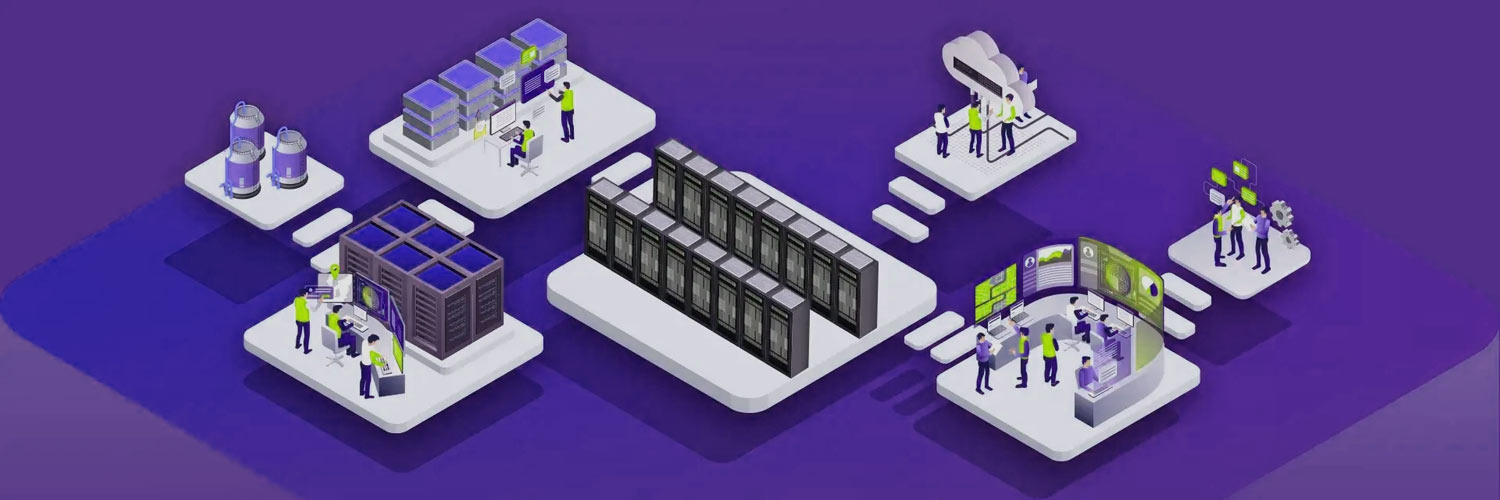
When talking about the core concept behind the term "AI Factory", we can say that it has been polarizing, but it's not about replacing workers with robots. Instead, it represents a repeatable system design for transforming data, domain knowledge, workflows and human intent into reliable, measurable, scalable outputs. The concept is often misunderstood as implying manual labor, but it's actually about infrastructure and production systems.
Infrastructure and Technical Reality
The technical side reveals that selling servers has evolved into delivering entire data centers. AI factories require complete infrastructure: power, cooling, networking, storage, and integration. You can't just deliver a server without network connectivity as it's useless. The infrastructure must be homogenized and generic enough to run any workload, enabling business continuity and resiliency across different locations.
Token Production and Versatility
The key insight is that AI factories produce tokens, units of AI output, that serve any purpose. The same Blackwell GPU can generate tokens for funny cat pictures, protein folding for drug discovery or real-time translation across 30 languages. This versatility makes the infrastructure generic and reusable. The factory pattern in software, applied to AI, means the system can adapt as models and software evolve every six months without fundamental redesign.
Agentic AI and Operational Shift
The hot topic these days is the shift toward agentic AI, where autonomous agents execute tasks on their own. This represents a move from generative AI to operational AI, where agents communicate and collaborate. While this raises security concerns, it also creates leverage for high-agency workers who can effectively use these tools.
Planning and Future Workflows
Companies deploying AI at scale discover they need capacity planning, scheduling, observability, data governance, and security boundaries. The AI factory concept helps articulate these needs upfront, forcing better planning and architecture. The focus is shifting from hardware speed to what workflows and outcomes new hardware enables. The future is about AI-enabled workflows and tooling that help accomplish goals, making the AI Factory a practical term for modern business operations.