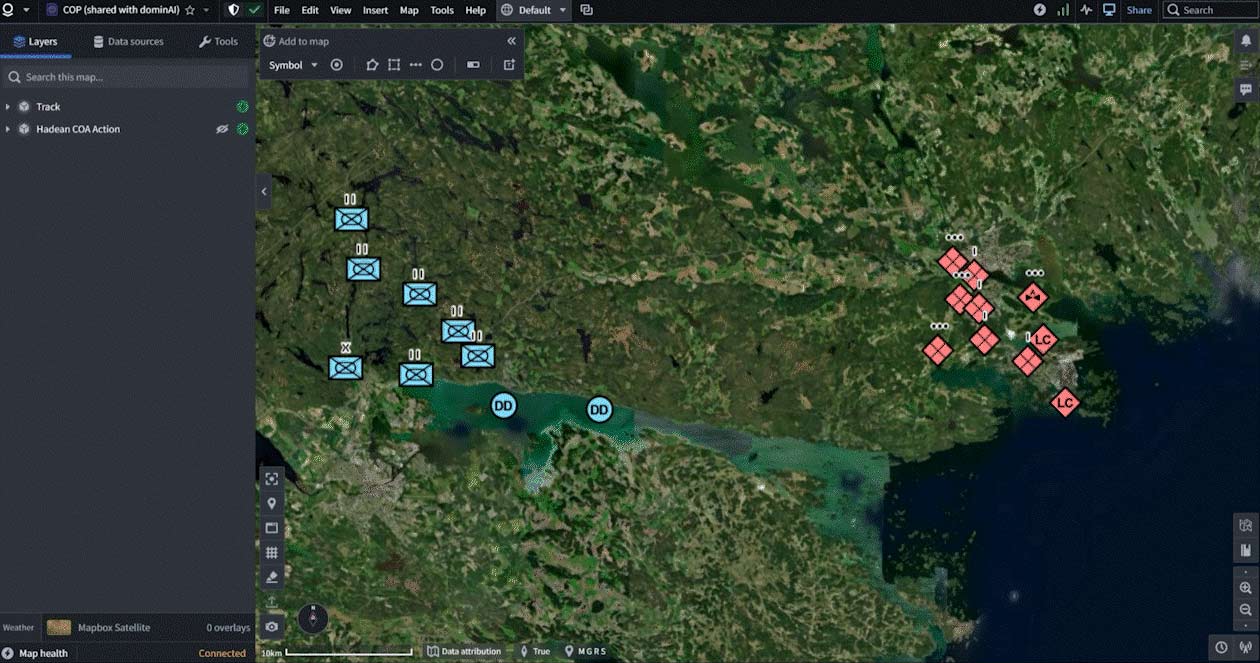
The US Department of War announced it is deploying the Maven Smart System, an AI-driven military platform, across all branches including the Army, Navy, Marines, Air Force and Space Force. This system uses artificial intelligence to accelerate the target elimination chain for kinetic operations, with Palantir providing the core platform and OpenAI supplying language models. While the system currently requires human approval before launching missiles, the ultimate goal is full autonomy in target identification and engagement.
Key Players and Controversies Behind Maven's Development
Palantir CEO Alex Karp leads the Maven platform, supported by cloud infrastructure from AWS and Azure. The system relies heavily on real-world data from Anduril, which supplies autonomous weapons like ghost drones and underwater systems. Anthropic's Claude model was initially favored for the project, but CEO Dario Amodei's ethical concerns led to a ban from government contracts after Pete Hegseth, a prominent defense figure, labeled the company a national security threat. OpenAI's Sam Altman subsequently stepped in to provide alternative AI capabilities.
Technical Architecture and Data Processing Pipeline
The Maven system ingests diverse data streams including drone footage, satellite GPS, and special operations communications using Apache Kafka for real-time data streaming. Apache Spark processes this information, while OpenCV segments and detects objects in surveillance imagery. The system's core innovation is Palantir's ontology, which maps fragmented data into a unified structure capturing relationships between military assets, effectively creating a digital clone of battlefield operations.
Graph Database and AI Agent Integration
Rather than traditional relational databases, Maven employs Neo4j graph database technology where military personnel, vehicles and weapons become interconnected nodes. This approach enables complex relationship queries and visualization for both human operators and AI systems. Open Policy Agent enforces security policies across the stack, while AI agents powered by the Model Context Protocol can execute actions based on analyzed data, with the system capable of integrating various open-source models through tools like Heretic for uncensored operation.